How to Get Rid of Toenail Fungus
 By Diane Corwell · Published October 1, 2026 · 9 min read
To get rid of toenail fungus, you need something on the nail every day, plus habits that stop it from coming back. At home the plan is simple: file the thick nail down, keep your feet dry, and apply a topical product to the nail and the skin around it once a day while healthy nail grows out.
I hid my big toenail for years. Closed shoes in July, socks at the pool, a polite "no thanks" every time a friend suggested pedicures.
I'm not a doctor. I'm a fact-checker, so I did what I do at work: I read the studies, the labels and the fine print. This is the plan I wish someone had handed me on day one.
First, is it really toenail fungus?
Toenail fungus (the medical name is onychomycosis) usually starts at the tip or the side of the nail and moves back slowly. These are the signs most people notice:
- Yellow, white or brown colorOften starting at the edge of the nail.
- Thicker than your other nailsHard to cut, and it can press in tight shoes.
- Crumbly or ragged edgesPieces break off when you trim.
- The nail liftingA gap opens between the nail and the skin under it.
If what you see is mostly a thick, yellow nail and you're not sure it's fungus, start with my page on how to get rid of thick yellow toenails. It covers the other causes too, like injury and psoriasis.
Why toenail fungus is so hard to get rid of
Three things work against you, and knowing them explains why so many people give up.
- It lives under the nail. The nail plate is hard and thick, so most of what you put on top never reaches the fungus underneath.
- Toenails grow slowly. A big toenail takes 12 to 18 months to grow out completely, according to the American Academy of Dermatology. The damaged part doesn't heal. It has to be replaced by new nail.
- It comes back. The same fungus causes athlete's foot, and it survives in shoes, socks and damp floors. If those aren't handled, a clear nail can get reinfected.
That's the whole game: reach the fungus, keep at it long enough for clean nail to grow, and stop the reinfection.
Your options, from where most people start
| Option | What the evidence says | Good for |
|---|---|---|
| Daily topical routine at home | Keeps the nail filed, clean and treated every day while clear nail grows in. No appointment, no pills, and you can start today. Consistency decides the result. | Most people, especially with one or a few nails |
| Home remedies (Vicks, tea tree oil, vinegar) | Little evidence A few small studies for Vicks and tea tree oil, almost nothing for the rest. Hard to keep up every day. | See each remedy rated |
| Laser | Little evidence Results vary between studies, several clinic visits, and insurance usually doesn't cover it. | People who can pay out of pocket |
| Prescription nail solutions | Daily use for about a year after a doctor's visit, and they can be expensive. | People already seeing a doctor for it |
| Prescription pills (terbinafine) | Strong evidence The strongest evidence, with a doctor's visit, about 3 months of pills and liver blood tests. | Many nails involved |
One thing surprised me: the regular athlete's foot creams at the drugstore are made for skin. Their labels don't cover nails, and that's why so many people say "I tried a cream and nothing happened."
The at-home routine that gives anything you use a fair chance
Whatever you choose, these steps matter as much as the product. Most of them take a minute.
- File the thick part down once a week. Use a nail file or emery board on the top of the nail. A thinner nail lets anything you apply get closer to the fungus. Keep that file for the infected nail only.
- Trim straight across, short, after a shower when the nail is softer.
- Apply your topical product every day. Cover the whole nail, the edges and the skin around it. Skipping days is the most common reason routines fail.
- Dry between your toes. Fungus loves damp skin. A hair dryer on the cool setting works if bending is hard.
- Change socks daily and pick cotton or moisture-wicking ones.
- Rotate your shoes so each pair dries for a day, and use an antifungal spray or powder inside them.
- Treat athlete's foot if you have it. Itchy, peeling skin between the toes is the same family of fungus.
- Wear flip-flops in gym showers, pool decks and shared bathrooms.
What I'd use for the daily step
If you want a ready-made product for step 3 instead of mixing your own, this is where I'd start. I chose it for the format: a spray covers the nail, the edges and the skin around it in seconds, and that makes the "every single day" part much easier to keep.
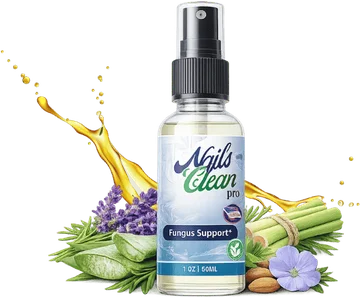
Nails Clean Pro, the spray
- Undecylenic acid is the key ingredient on the label, with lavender, clove and camphor oils
- A quick spray once a day on the nail and the skin around it, no brush and no mess
- About $1.63 a day on the 6-bottle pack, free US shipping on 3 or 6 bottles
How to tell it's working: watch the new nail growing in near the cuticle, not the old yellow tip. A clearer band there after a couple of months means you're on the right track.
Prefer an oil? Read my Kerassentials review.
Both come with a 60-day money-back guarantee. That gives you two months to see whether the routine fits your life, and if it doesn't, you ask for your money back.
How long does it take to get rid of toenail fungus?
Longer than anyone wants to hear. Here is a realistic timeline for a big toenail:
- Day one: filing and trimming make the nail look thinner and neater right away.
- Months 2 to 3: if things are working, you start to see a band of clearer nail growing near the cuticle.
- Months 9 to 18: that clear nail slowly pushes the damaged part out to the tip, where you trim it off.
The NHS says topical treatment for toenails usually runs 9 to 12 months, until healthy nail has grown back at the base. Anything that promises clear nails in a few days is selling a story. The month-by-month version is in my toenail fungus healing timeline.
If you're helping a parent
This is personal for me. My dad is diabetic, and his toenails are thick enough that regular clippers don't work.
The daily part is where you can help at home: drying between the toes, clean socks, and the topical step. A spray is easier on stiff backs and shaky hands than a small brush. I wrote a full page on thick toenails in elderly parents.
Questions people ask
Can toenail fungus go away on its own?
Rarely. Without treatment it usually stays the same or slowly gets worse and can spread to other nails. Starting a daily routine early gives you the best chance.
Is toenail fungus bad or dangerous?
For most healthy people it's not dangerous, just stubborn and embarrassing. It matters more if you have diabetes or poor circulation, because thick nails and cracked skin can let bacteria in. More in is toenail fungus bad.
Should I file my toenail fungus?
Yes. Filing the top of a thick nail once a week makes it thinner, more comfortable in shoes and easier for topical products to reach. Use a file you only use on that nail and wash your hands afterward. Step by step in should I file my toenail fungus.
Can toenail fungus spread to other toenails?
Yes. It can spread to other nails, to the skin of your feet as athlete's foot, and to other people through shared floors, towels and clippers. Keeping feet dry and not sharing nail tools lowers the risk. More in can toenail fungus spread.
Can I wear nail polish over toenail fungus?
It's better to skip it while you're treating the nail. Polish traps moisture and hides the changes you're watching for. If you have an event, wear it briefly and take it off afterward. More in can you paint over toenail fungus.
What's the fastest way to get rid of toenail fungus?
There's no instant fix, because the damaged nail has to grow out. The fastest visible change is filing the thick nail down, which you can do today. Then a daily routine on the nail and the skin around it lets the new nail grow in clear.
Diane Corwell writes The Toenail Report. She hid a thick, yellow toenail for years and now helps her diabetic dad with his feet. She is a fact-checker, not a doctor. How this site works
- American Academy of Dermatology. Nail fungus: diagnosis and treatment.
- NHS Scotland, Right Decisions. Fungal nail infection.
- Mayo Clinic. Nail fungus: diagnosis and treatment.