Diabetic Toenail Fungus Treatment: What's Safe to Use
 By Diane Corwell · Published October 31, 2026 · 8 min read
With diabetes, the safest toenail fungus treatment is a gentle daily routine on unbroken skin: check your feet, dry between the toes, file the thick nail lightly once a week, and treat the nail and the skin around it every day. Skip long soaks, peroxide and bleach, and never cut into the corners. A spray fits this routine best: nothing to swallow, no brush, and no touching the nail.
My dad has type 2 diabetes and two thick, yellow big toenails. When we finally decided to do something about them, his first question wasn't "what works?" It was "what's safe for me?" He already takes four pills a day and can't feel much in his toes. This is the answer I put together for him, checked against the studies and the diabetes foot-care guides.
What makes a treatment safe with diabetes
Every option below passed through the same four questions:
- Does it stay on unbroken skin? No cutting, digging or scraping under the nail. A small cut you can't feel is the real danger with diabetes. (Why toenail fungus is riskier with diabetes.)
- Does it avoid heat and long soaks? Numb feet can't judge hot water, and soaking softens the skin until it splits.
- Does it add a pill? If you already take several medicines, a treatment that stays on the nail keeps your pill organizer the same.
- Can you do it every day? A toenail takes a year or more to grow out. A routine that needs good eyesight and a flexible back gets dropped by week three.
The one thing not to wait on: redness that spreads, pus, or a sore that isn't healing needs medical care the same day.
Best toenail fungus treatment for diabetics: every option rated
| Option | What the evidence says | Safe with diabetes? |
|---|---|---|
| Daily spray on the nail and skin | Treats the nail and the skin around it every day while clear nail grows in. Nothing to swallow, no appointment, and you can start tonight. | Yes, on unbroken skin. The easiest to keep up with stiff backs and poor eyesight. |
| Vicks VapoRub | Little evidence One small study, no comparison group. | Yes, on unbroken skin. Greasy, and you have to rub it into the nail. |
| Tea tree oil | Some evidence One trial: about as good as a drugstore antifungal. | With care: diluted only. It can redden and crack the skin. |
| Vinegar or Epsom salt soaks | No real evidence No studies on toenails. | No. Long soaks split the skin, and numb feet can't feel water that's too hot. |
| Hydrogen peroxide or bleach | Don't use Damages skin. | Never. |
| Laser | Little evidence Results vary between studies. | Several clinic visits, usually paid out of pocket. |
| Prescription nail solution | A doctor's visit, then daily use for about a year. Expensive without coverage. | Yes, with a prescription. |
| Prescription pills (terbinafine) | A doctor's visit, about three months of tablets and liver blood tests. | One more pill on top of the ones you take, and a check of every medicine for interactions. |
The first row is the one I chose for my dad. It's the only option that is gentle on numb feet, adds no pills and is easy to do every day for as long as the nail takes to grow.
Fungal nail treatment for diabetics: the daily routine I use for my dad
It takes two minutes after his shower, and it doubles as the daily foot check every diabetes guide asks for.
- Look at both feet, soles and between the toes, with a mirror or a second pair of eyes.
- Wash in warm water, not hot. Test it with your elbow, not your toes.
- Dry completely, especially between the toes. That's where cracks start.
- Spray the whole nail, its edges and the skin around it. Let it dry before socks.
- Once a week, file the top of the thick nail with an emery board. Gently, never into the corners. (How to file a fungal toenail.)
- Clean, dry socks and shoes that don't press on the toes.
Why a spray: my dad can't bend close enough to paint a small brush on his big toe, and he can't see well enough to do it neatly. A spray takes a second per foot, it reaches the skin around the nail where fungus also lives, and nobody touches the nail. This is the one I picked for him:
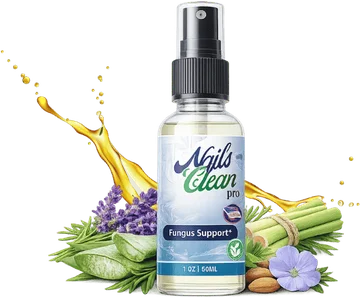
Nails Clean Pro, the spray
- Undecylenic acid is the key ingredient on the label, with lavender, clove and camphor oils
- A quick spray once a day on the nail and the skin around it, no brush and no mess
- About $1.63 a day on the 6-bottle pack, free US shipping on 3 or 6 bottles
Can I use Nails Clean Pro if I have diabetes?
It's an external-use spray for the nail and the skin around it, once a day. You don't swallow anything, so it adds nothing to the medicines you take. Spray it on unbroken skin, not on a cut or a sore. The cooling feel comes from camphor and menthol, the same ingredients as Vicks. It contains almond and walnut oils, so skip it if you have a nut allergy.
Can diabetics use Vicks, tea tree oil, vinegar or Epsom salt?
These are the home remedies people with diabetes ask about most. The short version:
- Vicks VapoRub: safe on unbroken skin, but greasy, and the only study ran for 48 weeks of daily rubbing. Most people drop it long before that. (Vicks for toenail fungus, in detail.)
- Tea tree oil: only diluted, and stop if the skin turns red or itchy. Irritated skin is the weak spot with diabetes.
- Apple cider vinegar soaks: no. The long soak is the problem.
- Epsom salt soaks: no, for the same reason. NHS diabetes foot-care guides say not to soak your feet because it can split the skin.
- Hydrogen peroxide: no. It damages healthy skin and doesn't reach under the nail.
- Foot spas and hot water: no. You can burn numb feet without feeling it.
All of these, rated by evidence: toenail fungus home remedies.
Is Lamisil safe for diabetics?
Terbinafine tablets (Lamisil) have been studied in people with diabetes, and the side effects were similar to everyone else's. The catch is the checkups: the doctor orders liver blood tests and goes through every medicine you take, because people with diabetes usually take several. The pills run for about three months, and the nail still needs a year to grow out clear. Lamisil cream is a different product: it's for athlete's foot on the skin, not for the nail. More in do toenail fungus pills work.
How long does treatment take with diabetes?
The first sign is a strip of clear nail near the cuticle, usually after two to three months of daily treatment. That strip is how you know the routine is working. From there the clear nail keeps pushing the old one out: a big toenail takes 12 to 18 months to grow out completely, sometimes longer with diabetes. Nothing sold without a prescription is FDA-approved for the nail itself, so the daily habit is what decides the result. (The full healing timeline, month by month.)
Questions people ask
What is the best toenail fungus treatment for diabetics?
A gentle daily routine on unbroken skin: check the feet, dry between the toes, and spray the nail and the skin around it every day, with a light weekly filing. It's safe on numb feet, adds no pills, and fits into the foot check people with diabetes already do.
Can diabetics use fungal nail treatment?
Yes. Sprays, liquids and creams used on the nail and unbroken skin are fine for people with diabetes. Avoid anything that needs cutting, scraping, heat or long soaks, and don't apply it on a cut or a sore.
Can a diabetic soak their feet?
A quick wash in warm water, yes. Long soaks, no: they soften the skin until it splits, and numb feet can't tell when the water is too hot. Dry well between the toes afterward.
Is Lamisil safe for diabetics?
Terbinafine tablets have been studied in people with diabetes with side effects similar to everyone else's, but they need a prescription, liver blood tests and a check of your other medicines. Lamisil cream is for the skin, not the nail.
Can diabetics get pedicures?
Only with care: tell the salon you have diabetes, skip the foot spa tub, and don't let anyone cut your cuticles or dig into the corners of the nail. Bring your own file if you can. Nail polish on a fungal nail traps moisture, so leave infected nails bare while you treat them.
Can I use a toenail fungus spray if I have diabetes?
Yes, on unbroken skin. Spray the nail, its edges and the skin around it once a day after drying your feet. It's the easiest routine to keep up with stiff backs or poor eyesight, because there's no small brush and no touching the nail.
If you're doing this for yourself or for a parent, start tonight: dry between the toes, spray the nail and the skin around it, and keep going every day. It's the routine I trust with my dad's feet, and it comes with a 60-day money-back guarantee.
Nails Clean Pro, the spray
- Undecylenic acid is the key ingredient on the label, with lavender, clove and camphor oils
- A quick spray once a day on the nail and the skin around it, no brush and no mess
- About $1.63 a day on the 6-bottle pack, free US shipping on 3 or 6 bottles
Prefer an oil? Read my Kerassentials review.
Diane Corwell writes The Toenail Report. She hid a thick, yellow toenail for years and now helps her diabetic dad with his feet. She is a fact-checker, not a doctor. How this site works
- Toenail onychomycosis in diabetic patients: issues and management. PubMed, 2009.
- Efinaconazole topical 10% for toenail onychomycosis in patients with diabetes. Journal of Drugs in Dermatology, 2014.
- NHS Scotland. Footcare advice for diabetes.
- American Diabetes Association. Foot complications.
- Nails Clean Pro official website: ingredient label and directions, checked October 2026.